









Working together on smart, sustainable cities

DMI ECOSYSTEM

We connect governments, businesses, and knowledge institutions. Together, we work on sharing knowledge, sharing data securely and confidentially, creating standards, and developing innovative solutions. This allows us to accelerate processes, ensure tight control, and make better decisions.

The DMI ecosystem brings
together governments,
industry and
research

about us

These participants set the ecosystem in motion

The Netherlands faces major and urgent challenges. CO2 and nitrogen emissions must be significantly reduced. We need 900,000 additional homes in cities, the climate urgently requires adjustments to the built environment, and energy supply can no longer be taken for granted.

The DMI ecosystem is designed for governments, businesses, and knowledge institutions.

about us

These participants set the ecosystem in motion

The Netherlands faces major and urgent challenges. CO2 and nitrogen emissions must be significantly reduced. We need 900,000 additional homes in cities, the climate urgently requires adjustments to the built environment, and energy supply can no longer be taken for granted.

developments high catherijne

© 2025 - Municipality of Utrecht

What others say about our
ecosystem

testimonials

JOIN OUR ECOSYSTEM AT

STEP-BY-STEP PLAN

step 1

sign up

Fill out the form and let us know that you are interested in participating. We will contact you and guide you through the process.

step 2

General Agreement

Sign the General Agreement and arrange secure access to data and applications. We will briefly check the terms and conditions.

step 3

become a participant

Pay the participation fee and submit your Commons contribution (data or services). You will receive access to MyDMI and the PDX.

step 4

join & develop

Participate in networks, share your knowledge and offerings, and get started with what the network has to offer.

STAY TUNED TO DMI's
LATEST DEVELOPMENTS

LATEST NEWS

Logistics
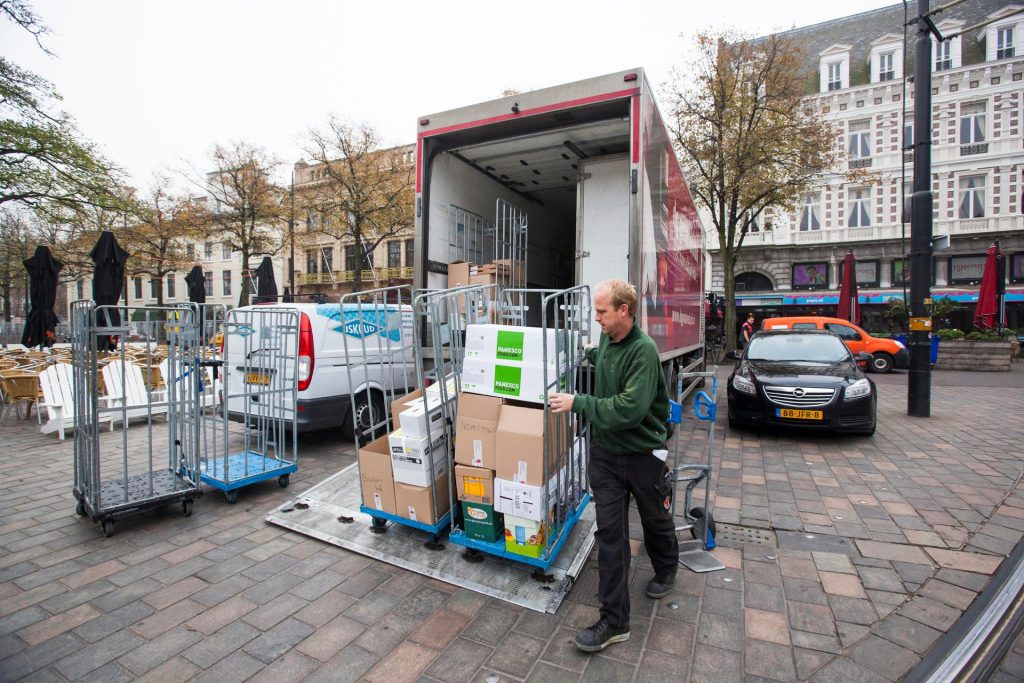
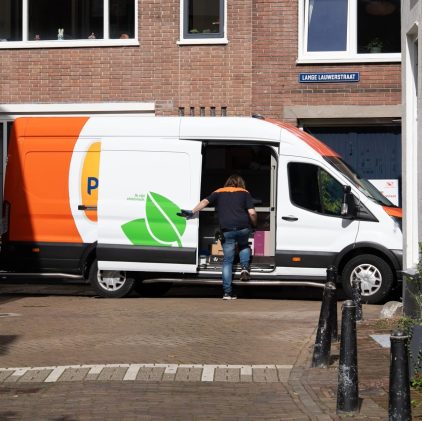
The pressure on space in our inner cities is rapidly increasing. Logistics traffic, terraces, cyclists, and pedestrians claim every square meter, multiple times a day. Municipalities are looking for ways to organize loading and unloading areas more efficiently, fairly, and above all, more intelligently. A new legal analysis by law firm AKD provides clarity: many of the desired digital measures are simply possible.
DMI ecosystem
How can you build faster and more sustainably in a city where space is scarce and the challenge is great? During a meeting of the Spring Agreement on Circular Industrial Construction, Mattijs Rommelse, construction director for the municipality of Rotterdam, provided insight into his city's approach. "Collaborating, agreeing on rules, digitizing, and sharing knowledge. That is the way forward."
DMI ecosystem
Arjan Spruijt of DMI and Michelle van Dijk of the Ministry of Infrastructure and Water Management (IOP?) recently spoke at a meeting of the Spring Agreement, the collaboration program between the six largest trade associations in the construction sector and the Ministry of Infrastructure and Water Management to accelerate Circular Industrial Construction. The central question: how can digitization help with this? "We need to make time to work differently."
DMI ecosystem
DMI participant OPENRED has an AI-driven platform that helps municipalities, project developers, and other stakeholders to realize housing projects smarter and faster. The company recently won the Urban Shark Tank Award at the Smart City Expo World Congress in Barcelona. CEO Joost van der Zon talks about their solution, international ambitions, and the role of the DMI network.  
DMI ecosystem
What is green actually worth? Lodewijk Hoekstra, co-founder of NL : "We can talk endlessly about sustainability, but if you don't make it concrete and measurable, it remains nothing more than good intentions." Together with landscape designer Nico Wissing, Hoekstra therefore founded NL in 2010.
Urban logistics
Where do trucks and vans drive? Where do they come from and what kind of cargo do they carry? And are vehicles becoming cleaner under the influence of zero-emission zones? Five municipalities—Amsterdam, The Hague, Rotterdam, Utrecht, and Zwolle—wanted to know before introducing measures such as delivery windows or access policies. Their question led to a proof of concept within the DMI ecosystem: how can data be used to provide insight into logistics flows in cities?

join us make your offer visible to the entire network

We are here for governments, businesses, and knowledge institutions.

Participate in one of
our events

events

view our
linkedin feed

view our linkedin feed

follow us

These participants set
dmi in motion.

participants

« from 5 »
Scroll to the top
Skip to content