Several issues come together in area development: housing, climate adaptation, infrastructure, energy, social facilities, mobility, accessibility, soil and subsoil, and sustainability. That makes it complex and urgent. How can we move forward quickly in practice?
DMI supports municipalities, provinces and private partners and connects solutions to the questions at hand. Together we join forces. And digitalization turns out to be the key to acceleration.
So there is no shortage of complexity. Issues are intertwined with each other and with other domains. A fragmented approach to area and housing development is therefore no longer sufficient. We need to tackle tasks in a coherent way and with an eye for the longer term. That is why digitization is essential: it makes integrated working possible, because many data can be shared between stakeholders from the first steps.
As a collective, DMI provides standards, best practices, data-sharing facilities and a General Agreement so that we can rely on each other and each other's data. A strong combination that helps to digitally map areas, develop scenarios, determine impacts and analyze risks and opportunities, and substantiate choices.
Through DMI, you can leverage expertise, data and tools from all participants.
As a collective, DMI provides standards, best practices, data-sharing facilities and a General Agreement so that we can rely on each other and each other's data. A strong combination that helps to digitally map areas, develop scenarios, determine impacts and analyze risks and opportunities, and substantiate choices.
DMI OFFERS YOU THE FOLLOWING
One source of truth
A single source of truth can greatly help all involved in the chain - from program managers and developers to corporations and construction companies - to minimize costs and uncertainties. In doing so, together we ensure scalable applications.
As an example we mention the MiniGIM for the exploration phase of an area development: a tool that unlocks spatial data, provides an unambiguous picture for everyone and helps to analyze opportunities, costs and risks at an early stage. Subsequent changes and high failure costs are thus prevented.
Best practices
Decision-making model, roadmap & framework
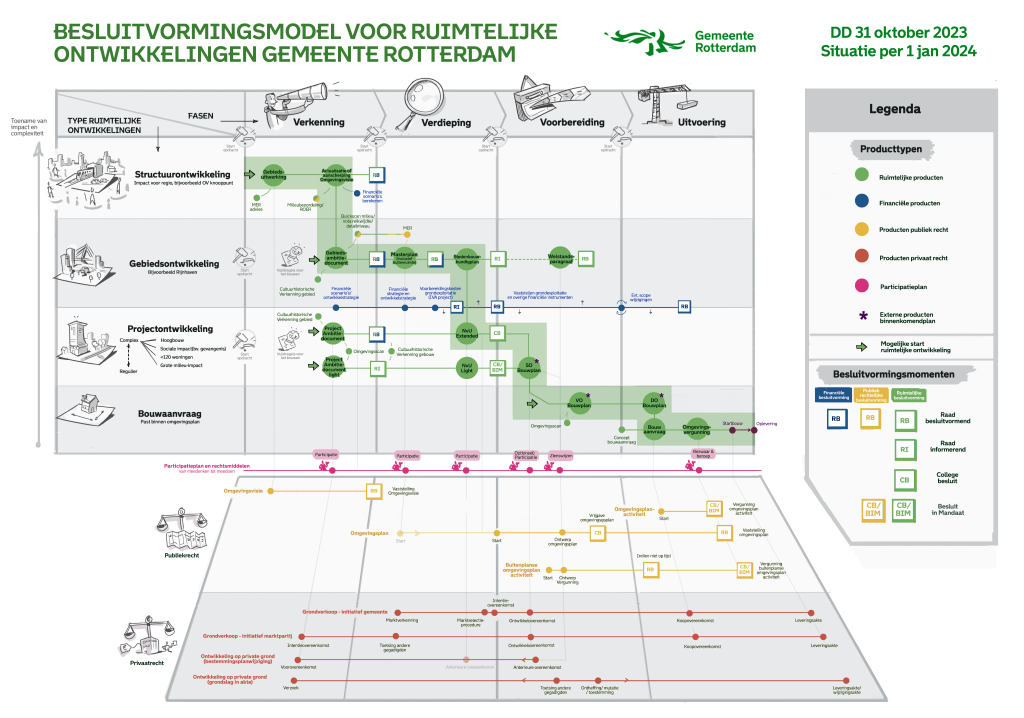
The Decision-making Model of the Municipality of Rotterdam, the Roadmap Future-proof Area Development as part of the City Deal Future-proof Area Development and the DMI Framework Area Development are important points of departure.
It provides a structured approach that helps municipalities realize area developments in a step-by-step, integrated and transparent manner. The Roadmap complements it with sustainable design principles, tools and forms of collaboration.
It helps municipalities work integrally on climate adaptation, energy, mobility and social quality. The DMI Framework links substantive policy goals to digital instrumentation.
DMI cooperates intensively with the Innovation and Scaling-up Program Housing Construction, the City Deal Future-proof Living Environment, Samen Slim, Better Use Housing Stock, MooiNL, ZichtopNederland and other ongoing and new initiatives, so that coherent and bundled work is done on the quality and speed of realization in area development.
"Accelerating area development is not something you do alone. join us at DMI, and we'll work together on digital solutions that connect vision, data and practice."
Digital representations of the city make it possible to first test policy and solutions virtually and explore various scenarios. This allows you to reach well-considered decisions, limit risks and increase support from residents and stakeholders. At DMI, we make this technology widely applicable and scalable.
MOBILITY
Within the DMI ecosystem, we work together on digital insight into mobility. It's about being able to objectively and digitally understand mobility flows, bottlenecks and behavior. How do people move through the city or region? Which forms of transport are used, where, for whom and when?
TRANSPORT AND LOGISTICS
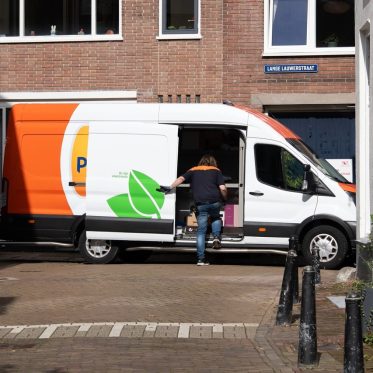
Space is scarce, new housing must be built, and we want more greenery and fewer emissions. And oh yes, the city could be less crowded. Data and smart tools help with insight into traffic flows and city logistics. DMI facilitates the availability of data and ensures that this data can be optimally shared and reused.
Area development
Area development involves multiple issues coming together. That makes it complex. In practice, how do we still get ahead quickly? DMI helps to establish a data-driven approach. We connect concrete solutions to the questions at hand, with digitization as the key to acceleration.
Water and soil
Bouwplannen moeten zich aanpassen aan de bodem en het water, niet andersom. Bij DMI kijken we hoe data en digitalisering daar een rol in kunnen spelen. Zo maken we beschikbare datasets bruikbaar en deelbaar in lopende gebiedsontwikkelingen.
Klimaat en energie
Nederland staat voor een enorme verduurzamingsopgave. In de komende decennia moet de CO2-uitstoot drastisch omlaag en willen we versneld overgaan van fossiele brandstof naar duurzame vormen van energie. Voor 2050 streven we naar klimaatneutraliteit. Digitale tools en een datagedreven aanpak helpen bij die versnelling.