MiniGIM accelerates area development and provides predictability
How do you make area development more transparent and predictable and ensure acceleration? According to Pim van Meer Redert, director of digitization at VORM, the answer lies in digitization. MiniGIM standardizes and digitizes the earliest phases of area development.
CITY
Netherlands
YEAR
2025
AFFECTED PARTY
neproM
SOLUTION
area information Model
SHARE
SOLUTION
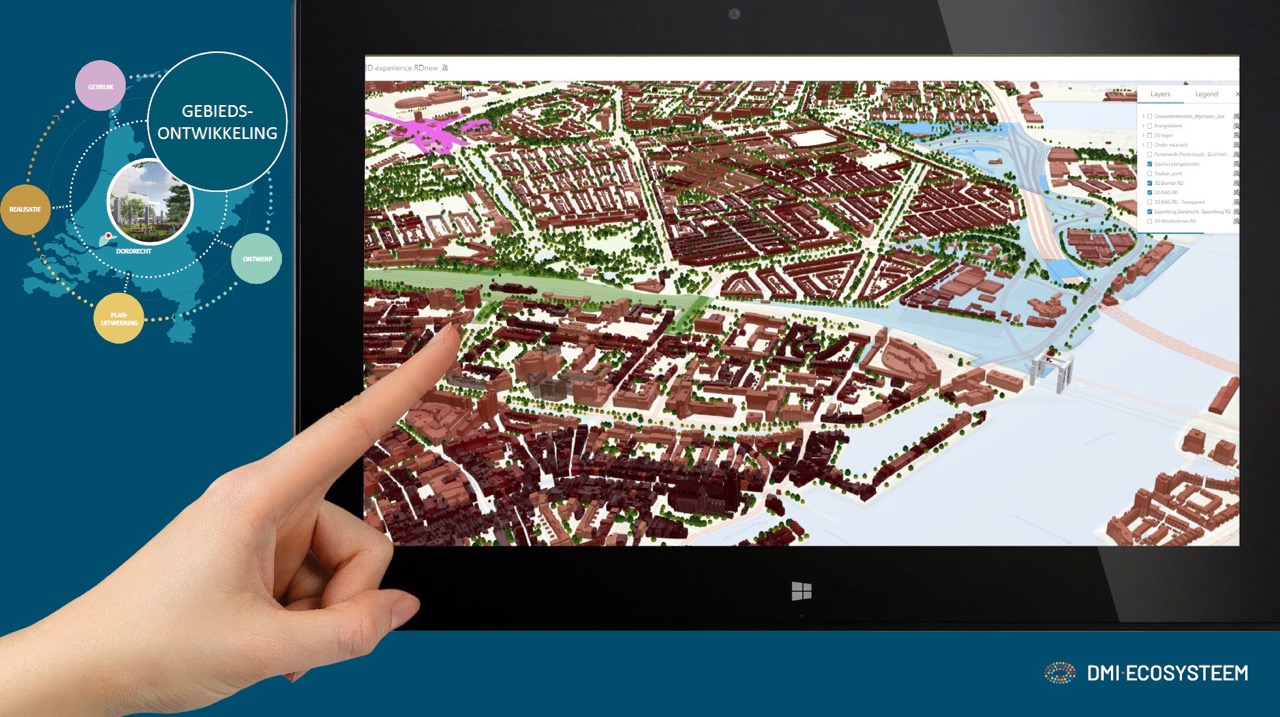
MiniGIM, which stands for Mini Area Information Model, is designed to reveal key information in the early stages of area development, including opportunities, obstacles, revenues, and costs. The model uses open standards such as Industry Foundation Classes, enabling developers, municipalities, and housing corporations to collaborate in 3D and exchange data seamlessly. “By managing quality integrally—from the program of requirements to sustainability—we can speed up the process,” says Van Meer Redert.
FORM
"With MiniGIM, we bring all parties to the same digital reality. This is how we accelerate area development, increase predictability and build greater understanding and quality together."
Pim van Meer RedertDirector of digitization
contradictions
An important part of MiniGIM is the environmental analysis checklist. This helps to identify internal contradictions in plans at an early stage. Van Meer Redert: "Sometimes plans turn out not to be feasible, which leads to redevelopment and frustration in municipalities. With digital techniques and a standardized checklist, we can see this more quickly and prevent it," says Van Meer Redert.
Four components of MiniGIM
Environmental analysis checklist: identifies risks and relevance of spatial choices.
Financial component: land exploitation as a starting point for objective discussions.
3D linkage: enables visual communication of plans towards stakeholders and the environment.
BIM Legal link: legal and notarial information integrated into the Building Information Model.
Need for predictability
MiniGIM is not only designed to speed up area development—it also provides greater predictability and certainty for all parties involved. Van Meer Redert explains: “Especially when fundamental decisions must be made very early in a process. Is something possible here? Is it allowed here, in this form, or in that way? And what does it mean for the city, the area, future residents, and the parties responsible together? With MiniGIM, you make the most of the available data and information, achieving maximum visibility. This allows you to better anticipate the process and build in the necessary certainties.”
Letter of intent MiniGIM at Provada
At the real estate exhibition Provada 2025 (June 17–19), parties signed the MiniGIM letter of intent. With this agreement, public and private stakeholders committed to greater transparency, standardization, and collaboration—all based on a single source of truth. Through MiniGIM, they are creating a digital foundation that speeds up processes and safeguards quality. These are not just promises, but concrete agreements.
Further refining the method
The digital model was developed by a consortium of area developers led by NEPROM. DMI actively supports the model, helps in its further development and establishes the connection with municipalities and housing corporations. In the coming period, municipalities including Rotterdam, Apeldoorn, Alkmaar, Dordrecht and the Ministry of Infrastructure and Water Management are preparing to use MiniGIM. "Pilot projects help to build confidence and to further refine the method," says Van Meer Redert.
Widely available
In short, MiniGIM provides predictability and certainty in area development processes, where fundamental decisions must be made early. Van Meer Redert explains: “By having all parties work from the same digital reality, you prevent mismatches, save time, and avoid costly adjustments. Achieving this requires both technical support and cooperation agreements. DMI facilitates that collaboration and ensures that knowledge and standards are widely accessible.”
join us make your offer visible to the entire network
We are here for governments, businesses, and knowledge institutions.